Pediatric Critical Care
Pneumonia in Children: From OPD Treatment to Ventilator and ECMO in the ICU
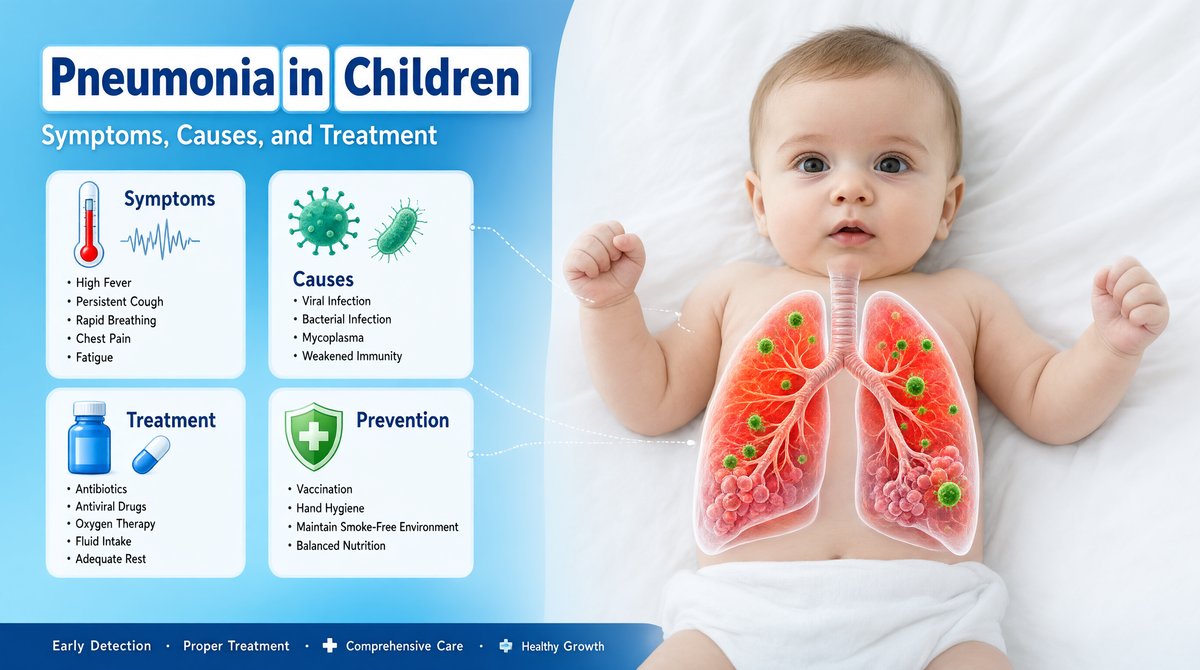
Pneumonia is an infection of the lungs, and it remains one of the leading causes of death in children under 5 in India. The good news is that most children recover quickly with simple treatment, and most severe pneumonia can be prevented with vaccines. This article explains how pneumonia looks in different ages, how care steps up from a simple OPD visit to oxygen, ventilator, and ECMO in the PICU, and why vaccination matters so much.
What Causes Pneumonia in Children?
Pneumonia can be caused by viruses (such as RSV and influenza), bacteria (such as Streptococcus pneumoniae, Hib, and Staphylococcus aureus), and atypical organisms such as Mycoplasma. In India, tuberculosis is also considered when a cough or lung problem is prolonged. Viral pneumonia is common in infants and toddlers, while bacterial pneumonia tends to be more severe. Risk is higher in babies who are premature or malnourished, in children who are not fully vaccinated, and in homes with smoke from tobacco, chulha, or heavy air pollution, including the winter months in Hyderabad.
How Pneumonia Presents: Different Ages, Different Signs
| Age | Typical presentation |
|---|---|
| Newborns and young infants (under 2 months) | Fast breathing, grunting, poor feeding, lethargy, and sometimes pauses in breathing. Fever may be absent, and even mild signs can be serious at this age |
| Infants (2 to 12 months) | Cough, fever, fast breathing, chest or lower-rib indrawing, noisy or wheezy breathing, and refusing feeds |
| Toddlers and preschoolers (1 to 5 years) | Fever, cough, fast and laboured breathing, vomiting after coughing, tummy pain, and reduced activity |
| School-age children and teenagers | Cough, fever, chest or side pain, tiredness. "Walking pneumonia" (often Mycoplasma) causes a long-lasting cough in a child who still looks fairly well |
Fast Breathing: The Key Sign
The simplest early sign is fast breathing. Count the breaths for a full minute while the child is calm or asleep. Fast breathing is generally defined as:
- 60 or more breaths a minute in babies under 2 months
- 50 or more a minute at 2 to 11 months
- 40 or more a minute at 1 to 5 years
Danger Signs
Go to a hospital immediately if your child has:
- Chest or lower ribs pulling in with each breath (chest indrawing), or grunting
- Bluish lips or tongue
- Unable to feed, drink, or breastfeed
- Repeated vomiting or convulsions
- Unusual drowsiness, floppiness, or difficulty waking
- Pauses in breathing, or a very young baby with any breathing trouble
The Spectrum of Care: From OPD to ICU
Pneumonia treatment is matched to severity. Children are assessed for breathing rate, effort, oxygen level, ability to feed, and general condition, and care is stepped up if they worsen.
| Level of care | Who needs it | What is done |
|---|---|---|
| 1. OPD (home care) | Well child, fast breathing only, normal oxygen, feeding and drinking well | Antibiotic (usually oral amoxicillin) if bacterial pneumonia is likely, fever control with paracetamol, fluids, continued feeding, and review in 48 hours |
| 2. Ward admission | Chest indrawing, low oxygen, not feeding, vomiting, dehydration, age under 3 months, or no improvement in 48 hours | Oxygen, IV antibiotics, IV fluids, chest X-ray, blood tests, and close monitoring |
| 3. HDU or PICU, with oxygen support | Severe breathing difficulty, rising oxygen need, exhaustion, complications | High-flow nasal oxygen, or CPAP/BiPAP (non-invasive ventilation), continuous monitoring, IV antibiotics |
| 4. Ventilator (mechanical ventilation) | Respiratory failure: very low oxygen despite support, very tired child, shock, or loss of consciousness | A breathing tube and ventilator take over breathing, with lung-protective settings, sedation, careful fluids, and sometimes lying the child on the tummy (prone position) |
| 5. ECMO | A very small number with severe, potentially reversible lung failure not responding to maximal ventilator treatment | Blood is pumped outside the body through an oxygenator and returned, letting the lungs rest and heal |
Oxygen, High-Flow and Non-Invasive Support
Children whose oxygen level is low (generally below 92 to 94 percent) are given oxygen through a nasal tube or mask. If they tire or oxygen needs rise, a high-flow nasal cannula delivers warmed, humidified oxygen at higher flows, and CPAP or BiPAP supports the breathing through a mask. These steps often prevent the need for a ventilator.
When a Ventilator Is Needed
A ventilator is used when a child can no longer breathe adequately on their own, because of exhaustion, very low oxygen, or high carbon dioxide. A breathing tube is placed under sedation, and the machine supports breathing while antibiotics and other treatment work on the infection. Settings are gentle and lung-protective, and the aim is to wean the child off the ventilator as soon as the lungs recover. Many children improve within days.
What Is ECMO?
ECMO (extracorporeal membrane oxygenation) is a form of advanced life support for severe lung failure that does not respond to ventilator treatment. Blood is drawn from a large vessel, passed through a machine that adds oxygen and removes carbon dioxide, and returned to the body, so the lungs can rest while the infection is treated. It requires a specialized team and centre, and it carries risks such as bleeding, clotting, and infection. It is used in only a small, carefully selected group. When a child needs a level of care that is not available locally, the priority is to stabilize the child and move them safely to a suitable centre.
Complications Doctors Look For
- Pleural effusion or empyema: fluid or pus around the lung, suspected when fever persists or the child has chest pain, and sometimes needing drainage
- Pneumothorax or lung abscess (uncommon)
- Sepsis or shock when infection spreads in the body
- Acute respiratory distress syndrome (ARDS), severe lung injury that may need ventilator or ECMO support
Why Vaccines Are Necessary
The most effective way to protect a child from severe pneumonia, ICU admission, and death is vaccination. Several routine vaccines target the germs that cause the worst pneumonias:
| Vaccine | What it protects against |
|---|---|
| Pneumococcal conjugate vaccine (PCV) | Pneumococcus, the most common cause of bacterial pneumonia, plus meningitis and blood infection |
| Hib (in pentavalent or hexavalent vaccine) | Haemophilus influenzae type b pneumonia and meningitis |
| Measles (MR) | Measles and its serious complication, pneumonia |
| DPT (pertussis) | Whooping cough, which can cause severe pneumonia and apnea in infants |
| Influenza (yearly from 6 months) | Flu and the bacterial pneumonia that can follow it |
| Chickenpox (varicella) | Chickenpox pneumonia and secondary skin and lung infections |
Vaccinated children get pneumonia less often, and when they do, it is usually milder. Vaccines also protect babies too young to be vaccinated, by reducing the spread of germs in the community. Follow the Indian Academy of Pediatrics schedule, and ask your pediatrician about catch-up for any missed doses. See our guides to childhood vaccination and catch-up vaccination. Options for preventing RSV, a leading cause of infant pneumonia, are also evolving, so ask your pediatrician what is available.
Other Ways to Reduce Risk
- Breastfeed exclusively for the first 6 months, then start nutritious complementary foods
- Keep the home free of tobacco smoke and avoid chulha smoke, mosquito coils, and incense around babies
- Wash hands often and keep sick contacts away from newborns
- Avoid overcrowding and keep rooms ventilated
- Treat malnutrition and anemia early
- Do not give cough and cold syrups to young children unless prescribed
- Seek early medical advice when cough comes with fast breathing
Home Care While Recovering
- Give medicines exactly as prescribed, and finish the antibiotic course
- Offer small, frequent feeds and plenty of fluids, and keep breastfeeding
- Use paracetamol for fever at the right dose for weight
- Keep the head slightly raised and the nose clear with saline drops
- Watch breathing at night, and return the same day if breathing worsens, fever persists beyond 48 hours of treatment, or your child feeds poorly
Read more in our posts on pneumonia in children, breathing difficulty in children, and wheezing.
Pneumonia Care in Kompally
Dr Suchit Jogu, Pediatrician and Pediatric Intensivist at KIMS Cuddles, Kompally, is trained in both everyday pediatrics and pediatric critical care. He evaluates children with cough, fast breathing, and pneumonia, and guides care from OPD treatment to hospital and ICU-level support when needed, along with vaccination advice to prevent a repeat. See also pediatric critical care consultation. Families from Kompally, Suchitra, Bollarum, and Secunderabad can call or WhatsApp +91 88016 64272.
Frequently Asked Questions
What are the first signs of pneumonia in a child?
Fast breathing, cough, fever, and difficulty feeding are the most common early signs. Look at the chest while your child is calm: if breathing is fast, noisy, or the chest or lower ribs pull in with each breath, see a pediatrician the same day.
Do all children with pneumonia need antibiotics?
No. Many pneumonias, especially in young children, are caused by viruses and do not need antibiotics. Your pediatrician decides based on age, signs, oxygen level, and sometimes tests. Never give leftover antibiotics at home.
When does a child with pneumonia need to be admitted?
Admission is advised for babies under 3 months, chest indrawing, low oxygen level, trouble feeding or drinking, repeated vomiting, dehydration, unusual sleepiness, or no improvement after 48 hours of OPD treatment.
How common is a ventilator or ECMO in pneumonia?
Rare. Most children with pneumonia recover with oral medicines at home or short hospital care. A small number develop respiratory failure and need ICU support. ECMO is used only in a very small group whose lungs fail despite maximal ventilator support.
Which vaccines protect against pneumonia?
Pneumococcal conjugate vaccine (PCV), Hib, measles, DPT (pertussis), and yearly influenza vaccine all reduce pneumonia. Chickenpox vaccine also prevents a serious pneumonia complication. Following the IAP schedule gives the best protection.
Related reading
Like our articles? Add Dr Suchit Jogu as a preferred source on Google:
This article is for general educational purposes and is not a substitute for professional medical advice, diagnosis, or treatment. If your child has difficulty breathing, bluish lips, or is very drowsy, go to the nearest emergency department immediately.