Asthma & Respiratory Problems
Pneumonia in Children: Signs, Diagnosis, and Treatment
Pneumonia — infection and inflammation of the lung tissue — remains one of the leading reasons children are hospitalized worldwide, but most cases, caught and treated appropriately, resolve completely with no lasting effect.
How Does Pneumonia Differ From a Regular Cold?
While a cold typically affects the upper airway (nose, throat), pneumonia involves the lungs themselves. Key differences include a persistently high fever, fast or labored breathing, chest pain, and a cough that's often (though not always) productive — combined with the child looking generally more unwell than a typical cold would suggest.
Signs That Suggest Pneumonia
- Fast breathing for the child's age, or visible effort with breathing
- Persistent fever, often higher than with a simple cold
- Cough that may bring up colored mucus
- Chest pain, sometimes worse with deep breaths or coughing
- Reduced energy, poor feeding, or unusual lethargy
- In infants: grunting, nasal flaring, or breathing that looks unusually hard
How Is Pneumonia Diagnosed and Treated?
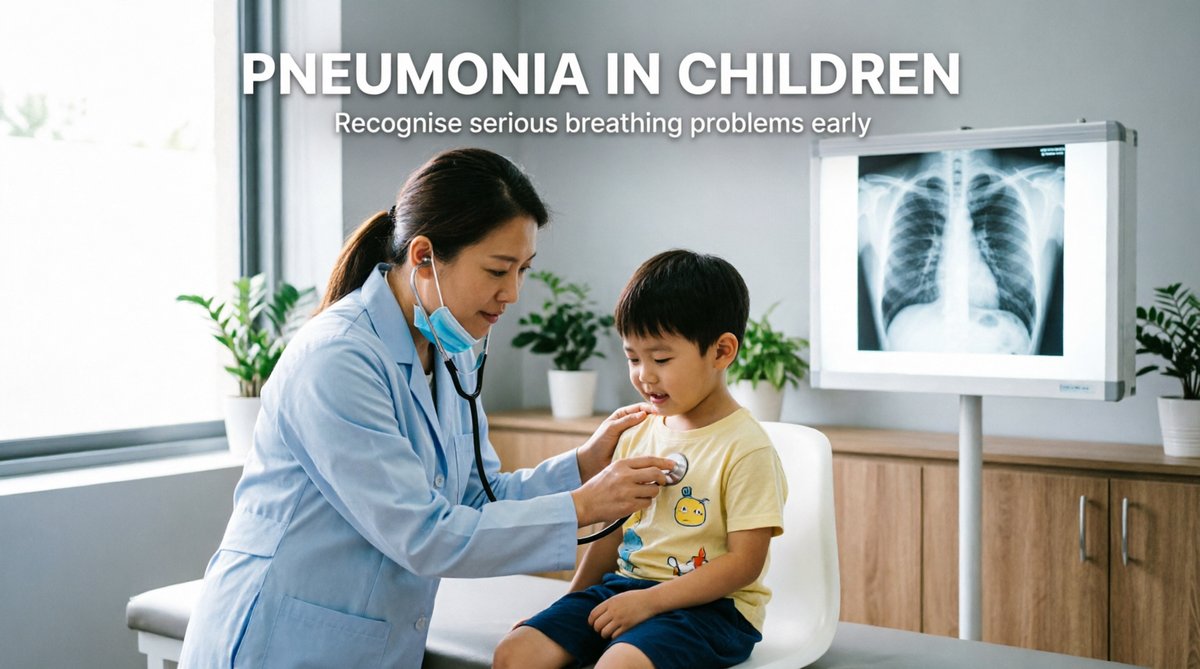
Diagnosis combines a clinical exam (listening to the lungs, assessing breathing effort and oxygen levels) with a chest X-ray when needed to confirm and characterize the infection. Bacterial pneumonia is treated with antibiotics; viral pneumonia is managed supportively, with careful monitoring either way for signs the child isn't improving as expected. Most children with pneumonia can be treated as outpatients with oral antibiotics and close follow-up.
When Does Pneumonia Need Hospitalization?
Hospital admission is generally needed for infants under a certain age, children with low oxygen levels, significant breathing difficulty, inability to keep fluids or medication down, or when a child isn't improving on outpatient treatment. In the hospital, treatment can include IV antibiotics, oxygen support, and close monitoring.
Preventing Pneumonia
Vaccination — particularly the pneumococcal conjugate vaccine (PCV), Hib vaccine, and annual flu vaccine — significantly reduces the risk of the most common bacterial causes of pneumonia. Good hygiene and avoiding exposure to tobacco smoke (including secondhand) also lower risk.
Pneumonia Care in Kompally
Dr. Suchit Jogu diagnoses and manages pediatric pneumonia at KIMS Cuddles, Kompally, with on-site access to pediatric critical care for children who need a higher level of support.
This article is for general educational purposes and is not a substitute for professional medical advice, diagnosis, or treatment.