Common Illness & Symptoms
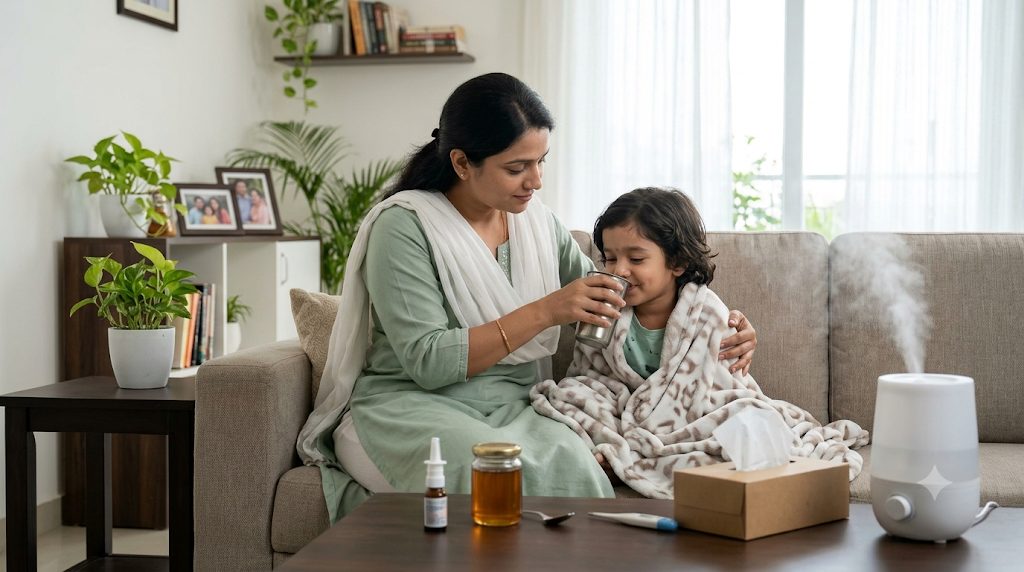
Cold or Flu in Kids? 6 Safe Home Remedies That Actually Work
Key Takeaways
- Most colds in children get better on their own in 7 to 10 days; flu usually settles in about 5 days.
- Fluids, saline nose drops, honey (only after age 1), a cool-mist humidifier and rest relieve symptoms without drugs.
- Cough and cold syrups should not be given to children under 2 years and are generally not recommended under 5 years.
- Paracetamol is the first choice for a fever that makes your child uncomfortable; never give aspirin to a child.
- Any fever of 38°C (100.4°F) or higher in a baby under 3 months needs a doctor the same day.
- Fast breathing, chest pulling in with each breath, blue lips, or a child too drowsy to wake properly needs emergency care immediately.
Contents
- Cold or flu: what is the difference?
- 6 safe home remedies for cold and flu
- Home care vs. when to see a doctor
- When to seek emergency or ICU-level care
- Cold vs. flu vs. RSV vs. dengue: a quick comparison
- What not to do: common home-remedy myths
- When can my child go back to school?
- Frequently asked questions
Colds and flu are the most common reason children in Hyderabad fall sick, with cases rising during the monsoon and again in the winter months. Young children catch 6 to 8 colds a year, and more if they attend daycare or school. This guide is for parents who want to know which home remedies are safe and actually help, which popular treatments to avoid, and the exact warning signs that mean a child needs a doctor or a hospital. Almost every child with a cold or flu can be cared for at home, and medicines are rarely the most important part of that care.
Cold or Flu: What Is the Difference?
Both are viral infections of the nose, throat and airways, so antibiotics do not treat either of them.
The common cold is usually caused by rhinoviruses. It begins gradually with sneezing, a runny or blocked nose, sore throat and mild cough. Fever, if present, is low and lasts 1 to 2 days. The child usually keeps playing and eating, if a little less than usual.
Influenza (flu) is caused by influenza A or B viruses. It starts suddenly with high fever, chills, body aches, headache and marked tiredness. Some children also vomit or have loose stools. A child with flu typically looks clearly unwell for 3 to 5 days.
Other viruses such as adenovirus, parainfluenza, RSV and COVID-19 cause similar symptoms. Adenovirus often adds red eyes and loose stools, and RSV is the main cause of wheezing and breathing difficulty in babies under 2 years.
6 Safe Home Remedies for Cold and Flu
- Keep fluids going. Offer small, frequent sips of water, ORS, coconut water, dal water, soups or warm milk. Breastfed babies should be fed more often. ORS is the best choice if your child is vomiting or has loose stools. A well-hydrated child passes urine at least once every 6 to 8 hours.
- Clear the nose with saline. Put 2 to 3 drops of plain saline (salt water) nose drops into each nostril, then wipe or gently suction the loosened mucus with a nasal aspirator. Doing this 10 to 15 minutes before feeds and sleep helps babies feed and sleep better. Saline is safe to use several times a day at any age.
- Use honey for cough, after age 1. Half to one teaspoon of honey, given plain or mixed in warm water, coats the throat and reduces night-time cough. It can be repeated up to 3 to 4 times a day. Brush your child's teeth afterwards, especially at bedtime. Never give honey to a baby under 12 months.
- Treat discomfort, not the thermometer. Fever is the body's normal response to infection and does not harm the brain. Give paracetamol when fever or body ache makes your child miserable or unable to sleep. The usual dose is 15 mg per kg of body weight, no more often than every 6 hours and no more than 4 doses in 24 hours; measure it with the syringe or cup supplied, not a kitchen spoon. Ibuprofen is only for children over 6 months who are drinking well, and should be avoided when dengue is possible. Never give aspirin to a child. Read more in our guide to fever in children.
- Add moisture to the air. A cool-mist humidifier in the child's room loosens mucus and eases a dry cough. Empty and clean it every day so mould and bacteria do not grow. A 10-minute sit with your child in a bathroom steamed up by a hot shower works too.
- Let your child rest. Sleep and quiet play help recovery. There is no need to force a child to stay in bed, and a child who feels well enough to play is a reassuring sign. Small, frequent meals are fine; appetite returns as the illness settles.
A mentholated vapour rub on the chest can ease night-time stuffiness in children aged 2 years and above. Apply it on the chest or back only, never inside or under the nose, and never use it on babies under 2 years.
Home Care vs. When to See a Doctor
Safe to manage at home if your child:
- Is breathing comfortably and drinking enough to pass urine every 6 to 8 hours
- Has fever for 3 days or less that comes down with paracetamol
- Plays or is alert when the fever is down
- Has a cough that is gradually improving after the first week
See your pediatrician within 24 hours if:
- Your baby is under 3 months old and has a temperature of 38°C (100.4°F) or higher
- Fever lasts more than 3 days, or reaches 40°C (104°F) or higher
- Fever disappears and then returns after the child seemed better
- There is ear pain, ear discharge, or a sore throat with difficulty swallowing
- The cough worsens after the first week, or lasts more than 3 weeks
- Your child has asthma, heart disease, kidney disease, low immunity or takes steroids; these children can get sick from flu faster
When to Seek Emergency or ICU-Level Care
In the PICU, the children who become seriously ill with flu or a respiratory virus usually show warning signs hours before they collapse. Recognising these signs early is what keeps a child on the ward instead of on a ventilator.
Go to the nearest emergency department immediately if your child has:
- Fast breathing at rest: 60 or more breaths a minute under 2 months, 50 or more at 2 to 12 months, or 40 or more at 1 to 5 years
- Chest indrawing: the lower chest or the skin between the ribs sucks in with every breath
- Grunting, nasal flaring or head bobbing with each breath
- Blue or grey lips, or an oxygen reading below 92% on a home pulse oximeter
- Unusual drowsiness: hard to wake, does not recognise you, or is too weak to stand or cry
- No urine for 8 hours, or a dry mouth with no tears
- Cold, mottled hands and feet with a fast heart rate, even after the fever comes down
- A seizure, new confusion, or severe headache with a stiff neck
- Pauses in breathing or blue spells in a baby
Children with flu can develop pneumonia, inflammation of the heart muscle (myocarditis) or brain inflammation (encephalitis). Oseltamivir, the antiviral medicine for flu, works best when started within 48 hours of symptom onset in high-risk or severely ill children, and is a decision for your doctor, not for home use.
Cold vs. Flu vs. RSV vs. Dengue: A Quick Comparison
| Feature | Common cold | Flu | RSV (bronchiolitis) | Dengue |
|---|---|---|---|---|
| Onset | Gradual | Sudden | Gradual, worsens on day 3 to 5 | Sudden |
| Fever | Low or none | High, 3 to 5 days | Low or moderate | High, 2 to 7 days |
| Runny nose | Prominent | Common | Prominent | Usually absent |
| Body ache | Mild | Marked | Not typical | Severe, with eye pain |
| Breathing | Normal | Usually normal | Fast, wheezy | Normal early |
| Most at risk | All ages | Under 5s, chronic illness | Babies under 2 years | All ages; danger after fever falls |
High fever with body ache but no runny nose during Hyderabad's monsoon should raise the possibility of dengue; read when dengue turns critical.
What Not to Do: Common Home-Remedy Myths
Cough syrups and "cold drops"
Combination cough and cold medicines do not shorten the illness and can cause drowsiness, fast heart rate and, rarely, dangerous side effects in young children. In October 2025, the Union Health Ministry advised that these medicines should not be prescribed or dispensed to children under 2 years and are generally not recommended under 5 years.
Steam from boiling water
Steam inhalation is a common practice in Indian homes, and the warmth does feel soothing. In young children, however, bowls and kettles of boiling water are a leading cause of scald burns. Use bathroom steam or a cool-mist humidifier instead.
Oil, garlic or camphor in or near the nose
Mustard oil or ghee put into a baby's nose can be inhaled into the lungs and cause a type of pneumonia. Camphor (kapoor) and strong balms can cause seizures in small children if swallowed or applied heavily. Keep oils and camphor away from the nose and mouth of babies.
Kadha and haldi doodh
A mild kadha or turmeric milk is a comforting warm drink for older children and adds to fluid intake. They do not cure a viral infection, should not be strong or heavily spiced, and are not suitable for babies under 1 year.
Asking for antibiotics "to be safe"
Antibiotics do not act on cold or flu viruses. Using them unnecessarily causes diarrhoea and rashes and builds antibiotic resistance.
When Can My Child Go Back to School?
Colds and flu spread easily through coughs, sneezes and shared toys. Keep your child at home until they have been fever-free for 24 hours without any fever medicine, vomiting and loose stools have stopped, and the cough is improving. Handwashing, covering coughs with the elbow, and an annual flu vaccine from 6 months of age reduce how often the whole family falls sick.
Conclusion
Most colds and flu in children are best treated with fluids, saline drops, honey after age 1, rest and paracetamol for discomfort, while cough syrups and antibiotics add risk without benefit. The illness should improve steadily over 7 to 10 days. Fast or laboured breathing, unusual drowsiness, poor urine output or a fever lasting beyond 3 days are the signs to act on. If you are unsure whether your child's symptoms are routine, Dr Suchit Jogu at KIMS Cuddles, Kompally can assess your child and guide the next steps.
This article is for general educational purposes and is not a substitute for professional medical advice, diagnosis, or treatment.
Frequently Asked Questions
How do I know if my child has a cold or the flu?
A cold usually starts slowly with a runny nose and sneezing, and the child stays fairly active. Flu starts suddenly with high fever, body aches and tiredness, and the child often looks clearly unwell for 3 to 5 days.
Should I give my child a cough syrup for a cold?
No cough or cold syrup should be given to a child under 2 years, and these medicines are generally not recommended under 5 years, as per the Union Health Ministry's October 2025 advisory. Honey (after age 1), fluids and saline drops are safer and work as well for most children.
Can I give honey to my baby for cough?
Only after the first birthday. Honey can cause infant botulism in babies under 12 months, so it must not be given to them in any form.
Does my child need antibiotics for a cold or flu?
No. Colds and flu are caused by viruses, and antibiotics do not kill viruses or shorten the illness. Antibiotics are only needed if a doctor diagnoses a bacterial complication such as an ear infection or pneumonia.
Is steam inhalation safe for children?
Steam from a bowl or kettle of boiling water causes serious burns in young children and is best avoided. Sitting with your child in a bathroom filled with steam from a hot shower is a safer option.
When can my child go back to school after a cold or flu?
Your child can return once they have had no fever for 24 hours without any fever medicine, vomiting and diarrhoea have stopped, and the cough is improving. A mild leftover cough alone is not a reason to stay home.
How long does a cold last in children?
Most colds settle in 7 to 10 days. The cough can continue for 2 to 3 weeks after the other symptoms have gone, and this is usually normal if the child is otherwise well.
Should my child get the flu vaccine every year?
Yes. The flu vaccine can be given from 6 months of age and is repeated every year because the circulating strains change. Children under 9 years receiving it for the first time need 2 doses, 4 weeks apart.
Related reading: Cough & Cold in Children: Home Care and When to Seek Help · Common Childhood Illnesses: Cold, Cough & Fever