Pediatric Emergency Care
Seizures in Children: What to Do and How They're Evaluated
Watching a child have a seizure is one of the most frightening experiences a parent can face. Most childhood seizures, particularly febrile seizures, look alarming but resolve completely without lasting harm — knowing what to do in the moment, and what happens afterward, makes a real difference.
What to Do During a Seizure
- Stay calm and stay with the child — don't leave them alone
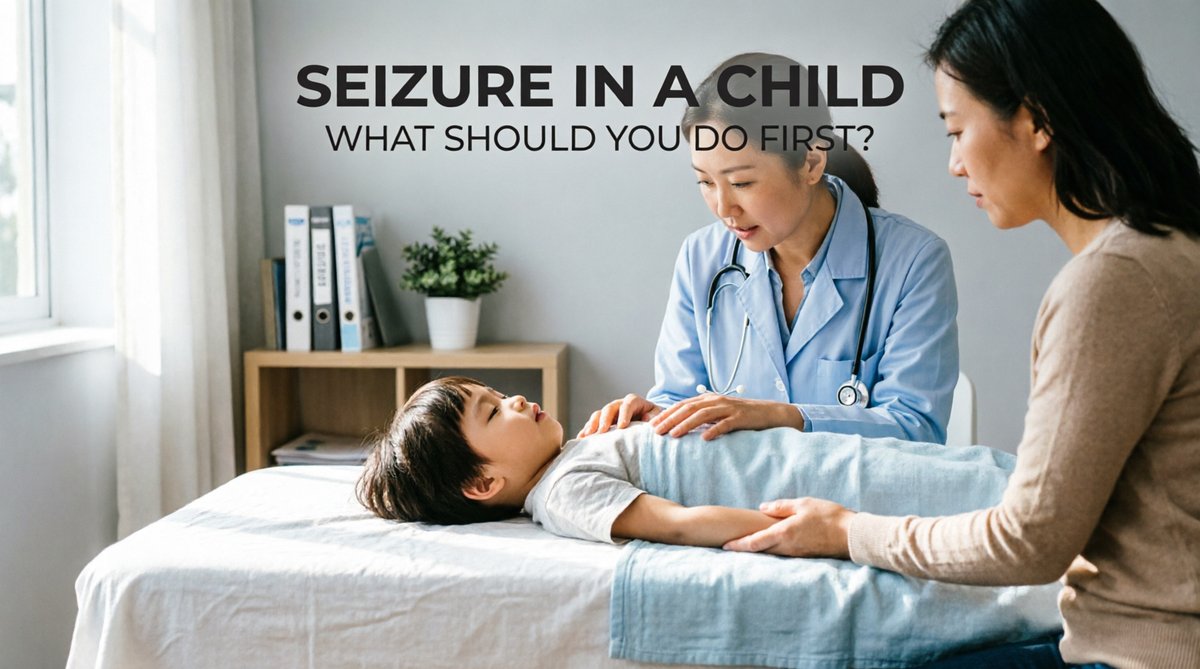
- Gently place them on their side on a soft, flat surface to keep the airway clear
- Remove nearby objects that could cause injury
- Do NOT put anything in the child's mouth — this is a myth that can cause injury
- Do NOT try to restrain the movements
- Note the time the seizure starts, so you know how long it lasts
When to Call for Emergency Help
Call emergency services if the seizure lasts more than 5 minutes, if it's the child's first-ever seizure, if breathing doesn't resume normally afterward, if another seizure starts before full recovery, or if there's an injury, vomiting, or the child doesn't regain normal alertness within a reasonable time after it stops.
What Are Febrile Seizures?
Febrile seizures — triggered by a rapid rise in body temperature, usually in children between 6 months and 5 years — are the most common type seen in childhood. They typically last under a few minutes and, while distressing to witness, generally don't indicate epilepsy or cause brain damage. A first febrile seizure still warrants medical evaluation to confirm the diagnosis and rule out other causes.
How Seizures Are Evaluated
Evaluation typically includes a detailed history of what happened, a physical and neurological exam, and — depending on the pattern and the child's age — possibly blood tests, imaging, or an EEG (a test that records brain electrical activity) if there's concern about a cause beyond a simple febrile seizure.
After a Seizure: What Parents Should Know
A single febrile seizure doesn't necessarily mean it will happen again, though some children do have recurrent febrile seizures. Recurrent non-febrile seizures may lead to a diagnosis of epilepsy and a referral to a pediatric neurologist for long-term management.
Seizure Evaluation in Kompally
Dr. Suchit Jogu evaluates children after seizure episodes at KIMS Cuddles, Kompally, with pediatric critical care expertise for managing prolonged or recurrent seizures requiring urgent stabilization.
This article is for general educational purposes and is not a substitute for professional medical advice. Any first seizure or prolonged seizure requires emergency evaluation.