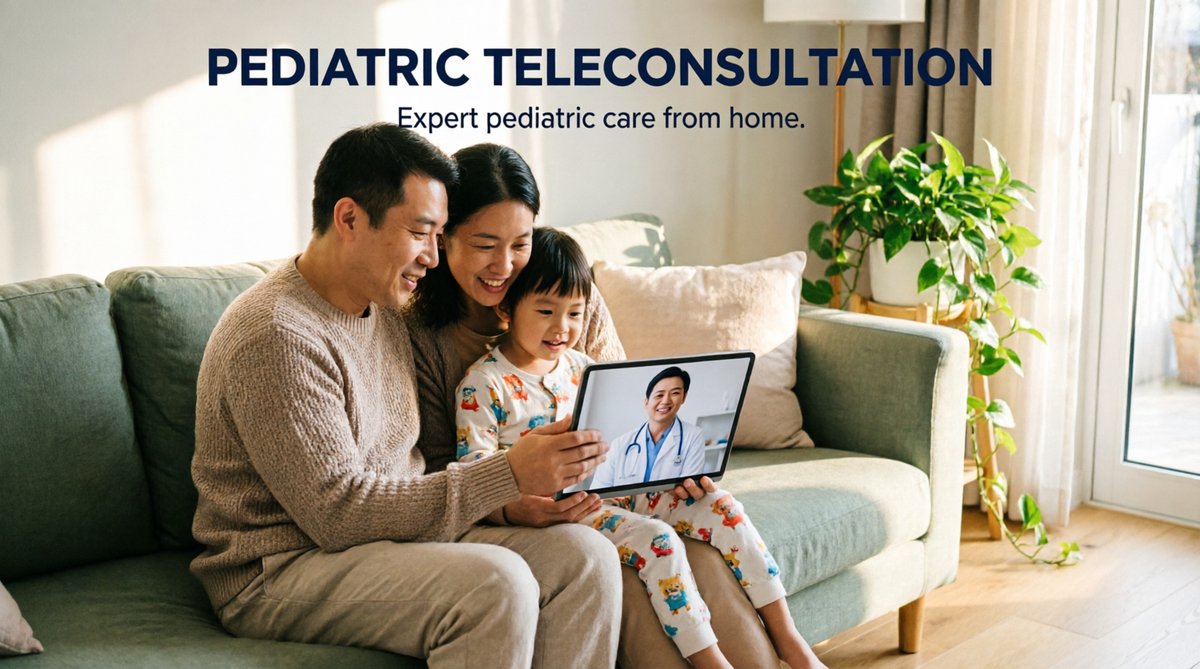
Teleconsultation
Pediatric Teleconsultation: What It's Good For and When to Go In-Person
A video consultation can't replace a physical exam, but for a wide range of pediatric concerns, it offers a genuinely useful first step — especially for busy parents, minor symptoms, or follow-up visits that don't need hands-on examination.
What Teleconsultation Works Well For
- Follow-up visits after an in-person diagnosis, to review progress
- Minor, non-urgent symptoms where visual assessment and history are often enough (mild rashes, minor cold symptoms, behavioral or feeding questions)
- Prescription renewals for chronic, stable conditions
- General advice and guidance — nutrition questions, developmental concerns, parenting questions
- Initial triage to decide whether an in-person visit is actually needed
What Needs an In-Person Visit
Anything requiring a physical exam — listening to the chest and heart, checking the ears or throat, palpating the abdomen, assessing a rash by touch and close inspection — needs to be seen in person. Any concerning or emergency symptom (breathing difficulty, high fever in a young infant, severe pain, injury) should go straight to an in-person or emergency visit rather than starting with a video call.
How to Prepare for a Teleconsultation
Have good lighting for the video, write down the specific concerns and questions in advance, keep a record of symptoms (when they started, any fever readings, photos of a rash if relevant), and have the child's weight and any current medications on hand. A quiet, well-lit space helps the doctor actually see what's being described.
Limitations to Keep in Mind
A teleconsultation doctor is working with less information than an in-person exam provides — this means a slightly more cautious approach, with a lower threshold to recommend an in-person follow-up if anything doesn't add up clearly over video. This isn't a flaw in teleconsultation; it's appropriate caution given the format's real limits.
Pediatric Teleconsultation From Kompally
Dr. Suchit Jogu offers pediatric teleconsultation for families in and around Kompally, with a clear recommendation for in-person evaluation whenever the situation calls for it.
This article is for general educational purposes and is not a substitute for professional medical advice, diagnosis, or treatment.