Common Illness & Symptoms
Constipation and Frequent Stomach Pain in Children: Why a High-Fiber Diet Matters
"My child keeps complaining of tummy pain" is one of the most common concerns parents bring to a pediatrician. After ruling out anything serious, the explanation is very often a simple one: constipation. It is easy to miss, because many constipated children pass stool daily and the only symptom is repeated stomach pain.
How Constipation Causes Stomach Pain
When stool stays in the large bowel, it loses water and becomes hard and bulky. The bowel then contracts forcefully to push it along, which causes crampy pain, usually around the belly button or the lower left side of the abdomen. The pain often comes and goes, may worsen after meals (when the gut becomes more active), and frequently eases after a bowel movement. A full bowel can also cause bloating, reduced appetite, and nausea.
Signs That Constipation May Be the Cause
- Recurrent stomach pain with no fever or vomiting
- Hard, dry, pellet-like or very large stools, or pain while passing stool
- Fewer than three bowel movements a week
- Holding back or avoiding the toilet, crossing legs, or clenching the buttocks
- Small streaks of blood on the stool surface (from a tiny anal tear)
- Stool-soiling on underwear, which can happen when liquid stool leaks around a hard blockage
- Poor appetite and a bloated belly
Why Children Become Constipated
The most common cause is a low-fiber diet combined with low fluid intake. Other frequent triggers include a painful bowel movement that makes the child afraid to go again, ignoring the urge at school, starting toilet training, excess milk intake (which fills the child up and displaces fiber-rich foods), and changes in routine such as travel or starting school. Less often, constipation is linked to an underlying medical condition, which is why persistent or severe cases deserve a proper evaluation.
What Does Fiber Do?
Fiber is the part of plant foods that the body cannot fully digest. Insoluble fiber (whole grains, vegetable skins) adds bulk to stool and speeds its passage. Soluble fiber (oats, fruit, legumes) absorbs water and keeps stool soft. Together they make stool larger, softer, and easier to pass, and they also feed the healthy bacteria in the gut. Fiber only works well when the child drinks enough water, otherwise it can make stool harder.
How Much Fiber Does a Child Need?
A simple, widely used guide is the child's age plus 5 grams per day, up to about 25 grams.
| Age | Approximate daily fiber |
|---|---|
| 2 years | 7 g |
| 4 years | 9 g |
| 6 years | 11 g |
| 8 years | 13 g |
| 10 years | 15 g |
| 12 years and above | 17–25 g |
Fiber-Rich Foods Children Actually Eat
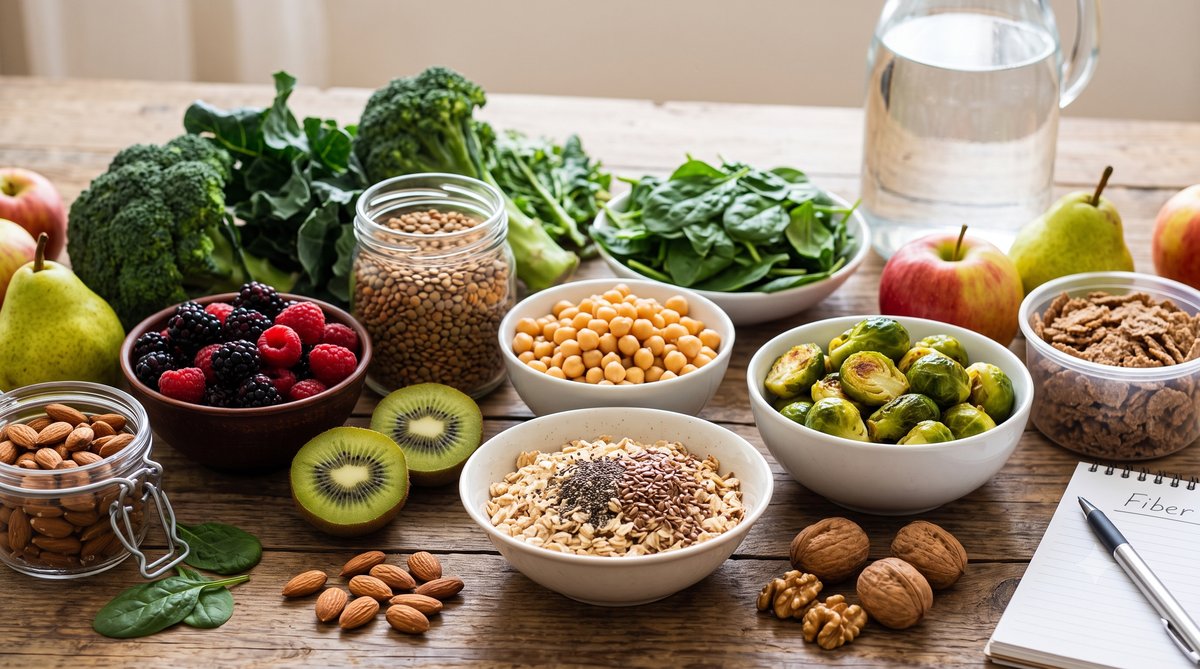
- Whole grains: whole wheat roti, ragi (finger millet), jowar, bajra, oats, brown rice, whole wheat bread
- Pulses and legumes: dal, rajma, chana, sprouts, peas
- Fruits (with skin where safe): guava, papaya, pear, apple, ripe banana, orange, pomegranate, berries
- Vegetables: carrot, beetroot, spinach, bottle gourd, pumpkin, beans, broccoli
- Seeds and nuts (age-appropriate): flaxseed or chia powder mixed into food; whole nuts only in older children because of choking risk
Prunes and prune juice, papaya, and kiwi are also well known for helping soften stools. Replacing fruit juice with whole fruit is better, since juice lacks the fiber.
Practical Tips to Make It Work
- Increase fiber gradually over one to two weeks, to avoid gas and bloating.
- Offer water through the day; most school-age children need roughly 4–6 glasses of fluids daily, more in hot weather.
- Limit refined foods such as maida, white bread, biscuits, chips, and instant noodles.
- Cap cow's milk at about 2–3 cups a day for toddlers so it doesn't crowd out solid food.
- Build a toilet routine: ask the child to sit for 5–10 minutes after a meal (breakfast is best), with feet supported on a stool.
- Encourage daily physical play; movement helps the gut.
- Never scold or punish; fear and stress make withholding worse.
Is Diet Alone Enough?
Often it is enough for mild, early constipation. But once a child has had hard stools for weeks or months, the bowel can stretch and the urge to go becomes dulled, so diet changes alone may not clear it. In these children, a doctor may prescribe a safe stool softener or osmotic laxative for a period of weeks to months, along with a toilet routine and a high-fiber diet. Starting and, importantly, stopping these medicines should be done under medical guidance, as stopping too early is the most common reason constipation relapses.
When Stomach Pain Is Not Just Constipation
See a doctor promptly if your child has any of the following:
- Severe pain, pain that wakes the child at night, or pain localized to the lower right abdomen
- Fever with stomach pain
- Repeated vomiting, especially green (bile-stained) vomit
- Blood mixed in stool, or black stools
- A swollen, hard belly
- Weight loss, poor growth, or persistent loss of appetite
- Constipation starting in the first weeks of life, or a history of delayed first stool after birth
- Burning urine or pain with urination
Constipation and Tummy Pain Care in Kompally
Dr. Suchit Jogu evaluates children with recurrent abdominal pain and constipation at KIMS Cuddles, Kompally, building a practical diet, toilet-routine, and (when needed) medication plan, and checking for other causes when the picture doesn't fit. Families from Kompally, Suchitra, Bollarum, and Secunderabad can book a consultation or reach out on WhatsApp.
Frequently Asked Questions
Can constipation cause stomach pain in children?
Yes. It is one of the most common causes of recurrent stomach pain in children, usually crampy and often relieved after passing stool.
How much fiber does my child need each day?
Roughly the child's age in years plus 5 grams, up to about 25 grams a day.
Is it safe to give my child laxatives?
Safe pediatric options exist, but they should be started, dosed, and stopped under a doctor's guidance.
My child poops daily but still has stomach pain. Can it still be constipation?
Yes. Children can pass small amounts of stool daily while a large amount remains stuck. A doctor's examination helps confirm this.
This article is for general educational purposes and is not a substitute for professional medical advice, diagnosis, or treatment. Do not start laxatives or supplements for your child without consulting your pediatrician.